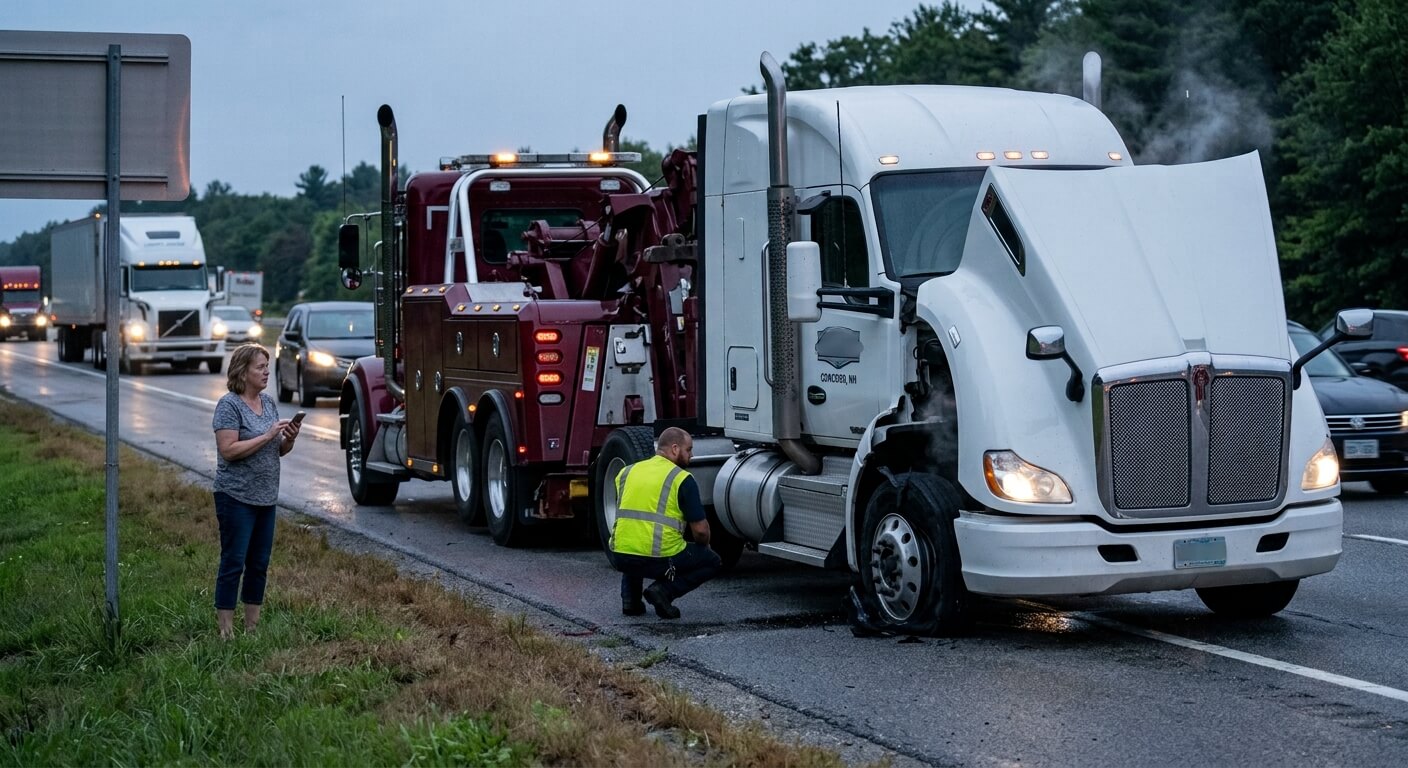
The Most Common Reasons Heavy Commercial Vehicles Break Down — And How to Spot the Warning Signs
A heavy commercial vehicle breakdown rarely comes completely out of nowhere. In most cases, there were warning signs in the days or weeks leading up to the incident — a dashboard light that got ignored, an unusual noise that was written off, a small performance issue that didn’t seem urgent enough to address right away. By the time the vehicle actually goes down, the problem has usually been building for a while.
Understanding the most common reasons heavy commercial vehicles break down — and knowing what to watch for before a minor issue becomes a major one — is one of the most practical things a truck driver or fleet manager can do to reduce unexpected downtime and keep vehicles operational. Here’s a rundown of the most frequent culprits and the warning signs that often show up before they cause a full breakdown.
Tire Blowouts and Tire Failures
Tire failures are among the most common causes of heavy vehicle breakdowns, and they’re also among the most dangerous. A blowout on a fully loaded tractor-trailer or dump truck at highway speed is not just a mechanical inconvenience — it’s a serious safety event that can cause the driver to lose control and puts everyone nearby at risk.
The warning signs of an impending tire failure are often visible before the blowout actually happens. Uneven tread wear, visible cracking or bulging in the sidewall, persistent low pressure in a specific tire, and vibration or pulling to one side while driving are all signals that a tire needs immediate attention. Regular pre-trip inspections that include a thorough walk-around and tire pressure check go a long way toward catching these issues before they escalate.
For commercial vehicles carrying heavy loads, maintaining correct tire pressure is especially critical. Underinflated tires on a heavily loaded vehicle generate excess heat during operation, and heat is the primary driver of blowouts under load.
Engine Overheating
Engine overheating is another frequent cause of heavy vehicle breakdowns, particularly during summer months or on long grades where the engine is working hard for extended periods. A heavy truck engine produces enormous amounts of heat under load, and the cooling system needs to be in top condition to manage it effectively.
Low coolant levels, a failing water pump, a clogged radiator, or a malfunctioning thermostat can all compromise the cooling system’s ability to keep engine temperatures in a safe range. The warning signs are usually clear — a rising temperature gauge, steam from under the hood, a coolant warning light, or a burning smell coming from the engine compartment. Any of these should be treated as an immediate stop situation rather than something to push through to the next stop.
Ignoring an overheating warning and continuing to drive can turn a cooling system repair into a catastrophic engine failure — a significantly more expensive and time-consuming problem to deal with.
Brake System Issues
For heavy commercial vehicles, the brake system is one of the most critical and most heavily stressed components on the vehicle. Air brake systems on commercial trucks are robust, but they require regular maintenance and attention to function safely and reliably over time.
Common brake-related breakdown causes include air leaks in the brake lines, worn brake pads or shoes, out-of-adjustment brakes, and moisture contamination in the air system. Warning signs that the brake system needs attention include longer stopping distances than usual, a pulling sensation when braking, unusual noises during brake application, and low air pressure warnings on the dashboard.
Brake issues on a heavy commercial vehicle are never something to defer — the stopping distances involved with a fully loaded truck are already significant under normal conditions, and any degradation in braking performance multiplies the safety risk considerably.
Transmission Failures
Transmission problems are a common and often expensive source of heavy vehicle breakdowns. Commercial truck transmissions handle enormous torque loads over long operating hours, and when they start to fail, they usually give advance notice before they go down completely.
Warning signs of transmission trouble include difficulty shifting gears, grinding or clunking noises during gear changes, slipping out of gear unexpectedly, delayed engagement when moving from neutral, and transmission fluid leaks visible under the vehicle after parking. A burning smell while driving can also indicate transmission fluid overheating — a sign the system is under more stress than it can handle.
Catching transmission issues early and addressing them during a planned maintenance window is almost always less expensive and less disruptive than dealing with a full transmission failure on the road.
Electrical System Failures
Modern heavy commercial vehicles rely on complex electrical systems to manage everything from engine performance to safety systems to driver information displays. Electrical failures can be tricky because they manifest in so many different ways — a truck that won’t start, warning lights that come on without an obvious cause, accessories that stop working, or intermittent power issues that are hard to pin down.
Battery issues are among the most common electrical problems, particularly in cold weather when battery performance drops significantly. A battery that starts the vehicle unreliably, requires frequent jump starts, or causes the vehicle to crank slowly in the morning is a battery that needs to be tested and likely replaced before it leaves the vehicle stranded entirely.
Alternator failures are another common culprit — when the alternator stops charging the battery effectively, the vehicle will run on battery power alone until it’s depleted, which can happen quickly on a vehicle with significant electrical load.
Fuel System Problems
Running out of fuel is an obvious and avoidable cause of breakdown, but fuel system problems go beyond an empty tank. Fuel contamination, clogged fuel filters, failing fuel pumps, and fuel line issues can all cause a commercial vehicle to lose power or stop running entirely, even with fuel in the tank.
Fuel filter maintenance is a commonly overlooked item on heavy vehicle maintenance schedules, particularly for diesel engines. A clogged fuel filter restricts fuel flow to the engine and causes performance issues — rough running, loss of power under load, and difficulty starting — before eventually causing the vehicle to stop running altogether. Keeping fuel filters on a regular replacement schedule is one of the simplest and most cost-effective ways to avoid a fuel system related breakdown.
Drivetrain and Axle Issues
The drivetrain components of a heavy commercial vehicle — driveshafts, U-joints, differentials, and axles — handle enormous stress over hundreds of thousands of operating miles. When these components start to wear or fail, the warning signs usually show up as vibration, unusual noises during acceleration or deceleration, or handling issues that weren’t present before.
U-joint failures in particular can happen suddenly and with significant consequences — a failed U-joint can cause a driveshaft to drop, which is dangerous at highway speed and immediately disables the vehicle. Regular inspection of U-joints for wear, play, and proper lubrication is a simple preventive measure that catches this issue before it becomes a roadside emergency.
The Bottom Line: Preventive Maintenance Is the Best Breakdown Prevention
Looking at all of these common breakdown causes, one theme stands out clearly — most of them are preventable with regular, thorough preventive maintenance. Pre-trip inspections, scheduled fluid changes, regular brake and tire checks, and attention to the warning signs the vehicle is giving are all far less disruptive and far less expensive than dealing with a breakdown on the road.
For fleet operators, a consistent maintenance schedule across all vehicles is one of the most effective tools available for reducing unexpected downtime. For individual truck drivers, building a habit of thorough pre-trip inspections and taking warning signs seriously rather than deferring them is the single most impactful thing they can do to keep their vehicle on the road.
When Prevention Isn’t Enough — Heavy-Duty Towing in Concord, NH
Even with the best maintenance practices, breakdowns happen. When they do, having the right heavy-duty towing partner ready to call makes the difference between a manageable situation and a very long day.
At Musk Heavy Duty Towing, we handle heavy commercial vehicle breakdowns of all kinds across the greater Concord, NH area. Whether it’s a tire blowout on I-93, a transmission failure on a job site, or anything in between, we show up with the right equipment and the experience to handle it correctly.